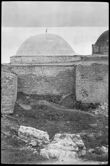
Citadel
The citadel was built on top of the rock Fis Kayası. It is the oldest part of the city, existing as a Hurrian settlement 2500-3000 years ago on Viran Tepe, with the walls built by the Romans in 349.The citadel had four gates: the Oğrun Gate opening to the Tigris, the Fetih Gate opening to the north, the Küpeli and Saray gates opening to the city. It housed most of the government buildings over the centuries.
7. Kolordu Komutanlık Binası
What is now called the 7. Kolordu Komutanlık Binası (7th Corps Command Building) was built by vali Mehmet Faik Paşa in 1902 under the orders of commander of the army corps Ferik Mehmet Kamil Paşa. It is located south of the old Mar Gevergis church and east of the courthouse. The building started being used by the 7th Corps in 1923.
Read Article
Büyük Adliye Sarayı
The Büyük Adliye Sarayı (Grand Courthouse) was been built in the north (south of the citadel prison) between 1891-1893.
Read Article


Cephanelik Binası
The Cephanelik Binası (Arsenal Building) has existed at least since at least the 1890s.
Read Article

Hükümet Konağı
The Hükümet Konağı (Government House), the headquarters of the vilayet government, was built on the east edge of the citadel looking over the Tigris in 1889, starting during the reign of Diyarbakır Governor Sırrı Pasha and completed during the reign of Hacı Hasan Pasha. Prior to this, buildings rented in the city were used for the Hükümet Konağı.
Read Article


![[Diyârbekir politicians, religious leaders, and notables]](https://black-amid-iiif.pjtsearch.com/iiif/2/66c5dea1724a236a7877cae7a1d785c1.jpg/full/640,284/0/default.jpg)
Jandarma İstihbarat Binası
The Jandarma İstihbarat Binası (Gendarmerie Intelligence Building) was built between 1887-1891 by Vali Hacı Hasan Paşa.
Read Article![On April 14 [27 April N.S.], bombs, illegal weapons and explosives seized during searches in Diyarbakır](https://black-amid-iiif.pjtsearch.com/iiif/2/08242c2163f7af6dbd0a8f65c12b6c16.jpg/full/473,350/0/default.jpg)


Karargâh Binası
The small square Karargâh Binası southwest of the Hükümet konak, used as the Umumi Müfettişlik building as of 1906 and during the First World War as the 2. Ordu Komutanlığı Karargâh Binası (2nd Army Command Military Headquarters), appears to have existed at least since since the 1890s. Karargâh Binası is known in Turkey for housing Mustafa Kemal during WWI.
Read ArticlePrison
The prison building was most likely built around 1887 by Hacı Hasan Paşa. As of 1899, the prison held close to a thousand prisoners. It was known to have bad conditions and many fights. During 1915, it was used to house and brutally torture Armenian notables.
Read Article


![Kavazoğlu Mıgırdıç from Diyarbekir sentenced to 15 years from 16 Rajab [12]94 [27 July 1877] for extortion](https://black-amid-iiif.pjtsearch.com/iiif/2/0a43c20ff2432486c3ba5fbbfdb5a062.jpg/full/394,512/0/default.jpg)
![Hacı Ali, son of Şeyh Mehmed from Diyarbekir, sentenced to 15 years from 24 Safar [12]98 [26 January 1881] for murder](https://black-amid-iiif.pjtsearch.com/iiif/2/a37c5477dd7c953e83e0959d49b4140e.jpg/full/394,512/0/default.jpg)
Vîrân Kal‘a
Vîrân Kal‘a (now known as Viran Tepe) is a fortified mound in the citadel. It was the nucleus of the city from ancient times due to its natural spring and defensive capabilities. It has an area of around 10,000 square feet and is around 150 feet tall. It was fortified in the early 13th century under the Artukid ruler Nasir al-Din Salih Mahmut bin Muhammad, housing an elaborate palace at that time. By 1827, the fortifications were in deep disrepair.
Read Article


Zabin Waterfall
The waterfall was formed by the natural spring in the citadel as well as from rainwater and wastewater, and led into the Tigris. The stream was named Zabin after the legendary Zaav, the tenth shah of the Pishdadian dynasty. The water feeding the waterfall came through underground passages.
Read Article

Other